- New
rustproof steel rods track and field stopwatch 25x50 mm spacer set of rulers steel brushes bubble wrap mailer strong adhesive toyota supra model car clips pmma sheet buckles purple bubble envelope trapezoid plastic hinges space saving hook night lights magnetic latches toy hinges 1:52 tool-free installation
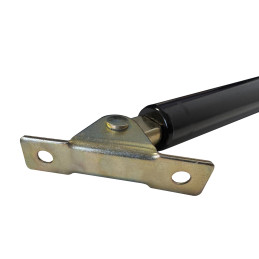
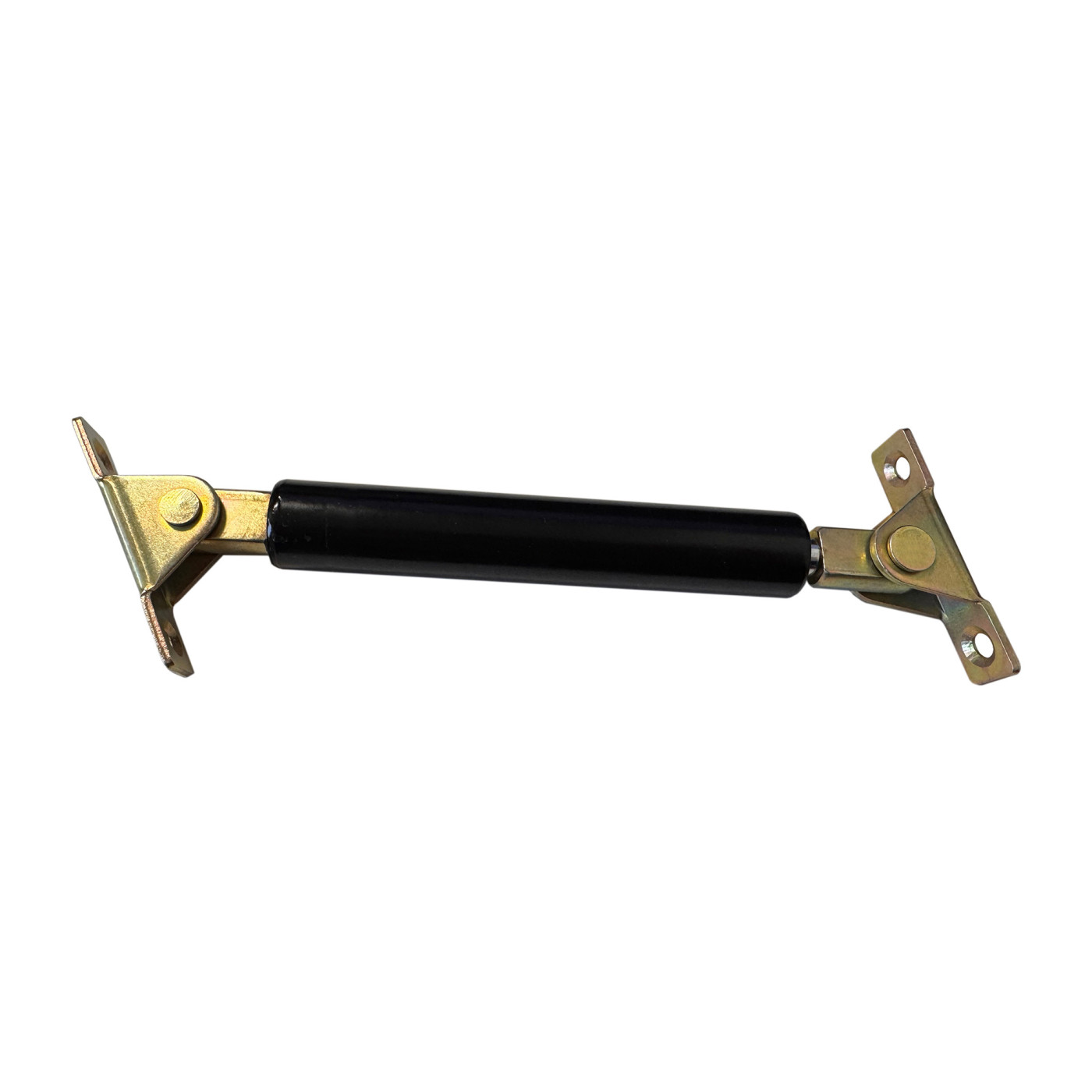
This is a universal gas pulling (tension) spring, supplied with the corresponding mounting brackets and screws.
In short, this is a cylinder that is retracted at rest and requires force to be extended — in this case 100 newtons.
As soon as this force is lost, the gas spring will automatically retract.
In addition to this gas pulling spring, there's also a gas pressure (compression) spring, which works the opposite way. See below for more explanation.
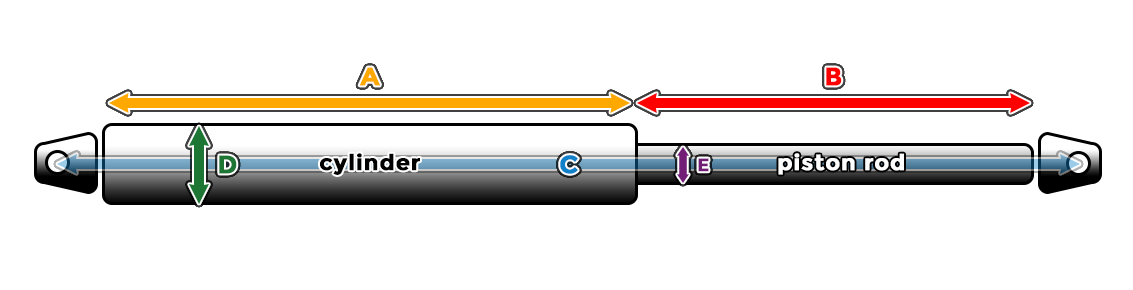
A: 130 mm
B: 88 mm
C: 175 mm
D: 22 mm
E: 10 mm
Force: 100N
Color: black
Which one do you need? Download the overview here with the different types, shapes, and sizes of our gas springs.
The difference between a gas pressure (compression) spring, a gas pulling (tension) spring and a gas damper.
Gas springs and gas dampers may look similar in appearance and construction, but they behave differently depending on the internal gas pressure and the design of the spring.
1. Gas compression spring
A gas compression spring works by storing pressurized gas in a cylinder. In its resting position (without external force), the gas spring automatically extends, forcing the piston rod out of the cylinder. This makes the spring ideal for applications that require lifting or supporting something, such as car tailgates, kitchen cabinets, or office chairs.
Mechanism: Internal gas pressure pushes the piston rod outward.
Use: To support or lift.
Examples: car tailgates, kitchen cabinets, office chairs.
2. Gas pulling (tension) spring
A gas pulling spring works in the opposite way. In its resting position, the piston rod is inside the cylinder and wants to stay there. When you pull the rod outward, a counterforce is created that pulls it back in. This makes gas pulling springs suitable for applications that require a constant pulling force to hold something in place or adjust its position.
Mechanism: Internal gas pressure pulls the piston rod inward.
Use: To hold or position.
Examples: self-closing doors or shutters, fitness equipment and mechanical adjustment systems.
3. Gas damper (neutral/center spring)
A gas damper, also called a neutral or mid-position gas spring, is designed to hold the piston rod in a neutral position instead of pushing it fully out or in. When you move the rod, it offers resistance in both directions and remains in the position you leave it in. Unlike compression or extension springs, a gas damper doesn't actively lift or pull, but smoothly controls the movement.
Mechanism: The internal gas and damping system resists movement in both directions and stabilizes the bar in place.
Use: To control movement and maintain a stable position.
Examples: Adjustable lids, soft-close or controlled opening mechanisms, movable panels, ergonomic or positioning systems.